Water ingress (part 3)
Like I stated in part 2 of this series, I already predicted that the water ingress would not be solved with just replacing the drain tube. Autumn came, and it started to rain more and more. I kept checking the inside of the trunk lid from time to time, and there was definitely still water ingress. Luckily, it was still limited to a few drops and only when it poured heavily.
At this point, I am quite convinced that water is coming from behind the tail lights. And with behind, I mean from behind the pocket where the tail light are mounted. You see, these pockets are glued (I presume) to the lid. Then the edges are sealed to the rest of the lid. Then the tail lights are mounted inside these pockets, using a foam seal around the mounting holes.
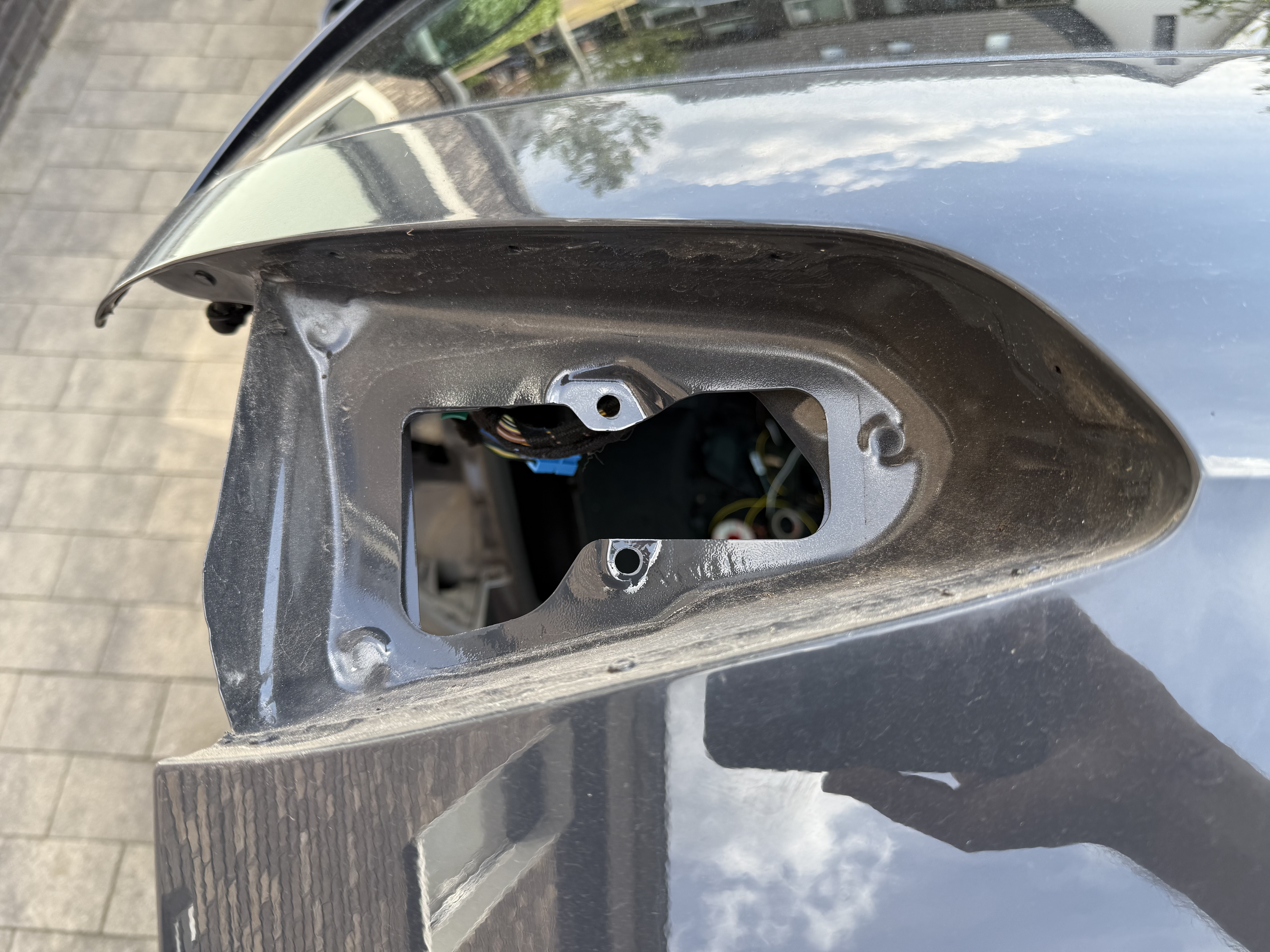
If water would enter from behind the pockets, then it could still get in from the top part of the trunk lid. The third brake light could be a possible entry point, where water would then run down via the side columns. Since I have the ingress on both sides, this seems plausible. To add to this theory, the clips I pulled from the side columns were a bit rusty, so there was definitely some moisture in these side columns.
To get a better view of what is going on on the inside of the trunk lid, I bought a cheap boroscope camera that can be connected to my phone. This way, I can insert the camera inside the trunk lid, pour it with water and see where the water goes.
Using the camera, I could not find any obvious water traces from the third brake light area, nor did I find obvious water traces from inside the side columns. I was expecting to see some (dried) water traces, or dirt, but there was nothing. To test this in a more controlled way, I taped up the seams of the trunk lid, except for the area around the third brake light. Then I poured water on the trunk lid again, and checked with the camera what was happening. To my surprise, I could not get a leak to happen, and I still could not see any water traces from behind the third brake light area. This made me rule out the third brake light as entry point.
I then focussed on the other possible entry points. I taped up the third brake light area, and also the top seam of the trunk lid. This way, I could rule out if water would enter via the rubber grommets. I found out that water would still enter, but since this could not enter via the top seam nor the third brake light, I had to conclude that water must be entering via the side colums or lower.
Since there are no ingress points on the side columns of the trunk lid, I then focussed on the tail light pockets. I taped up all of the seams of the upper part of the trunk lid, except for the seams around the tail light pockets. When I poured water on the trunk lid now, I could see water entering the trunk almost instantly. Still not a lot of water, but definitely noticable. I then removed the inner tail lights, taped up the hole and repeated the test. Still, water came in, but now I could rule out the tail light seals as entry point.
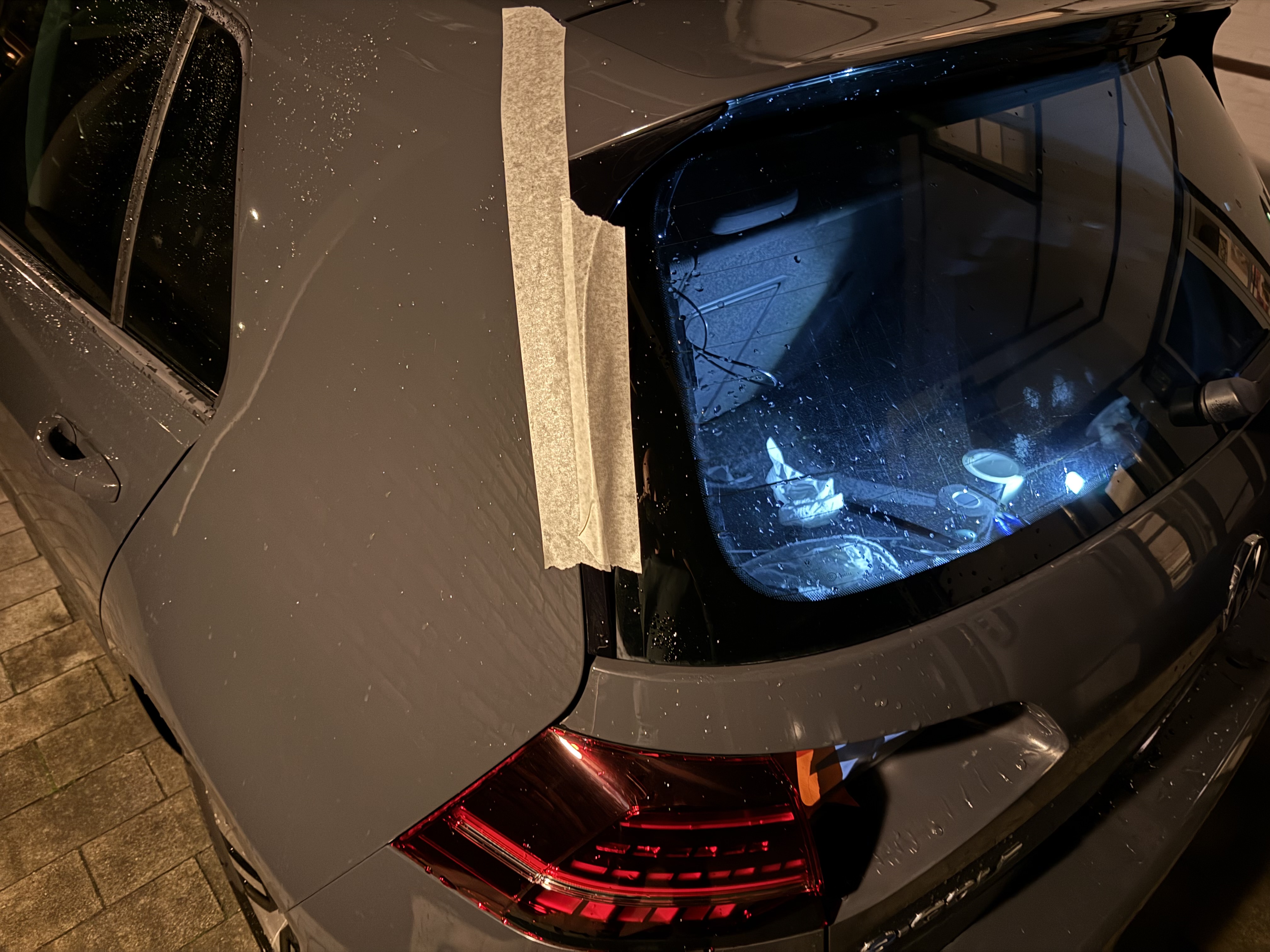
Besides glued seams, there are also some spot welds on the tail light pockets. In my opinion, these spot welds were covered not too well, making them questionable as water tightness. I then taped up these spot welds, and called it a day. I figured that time will tell if this was the culprit.
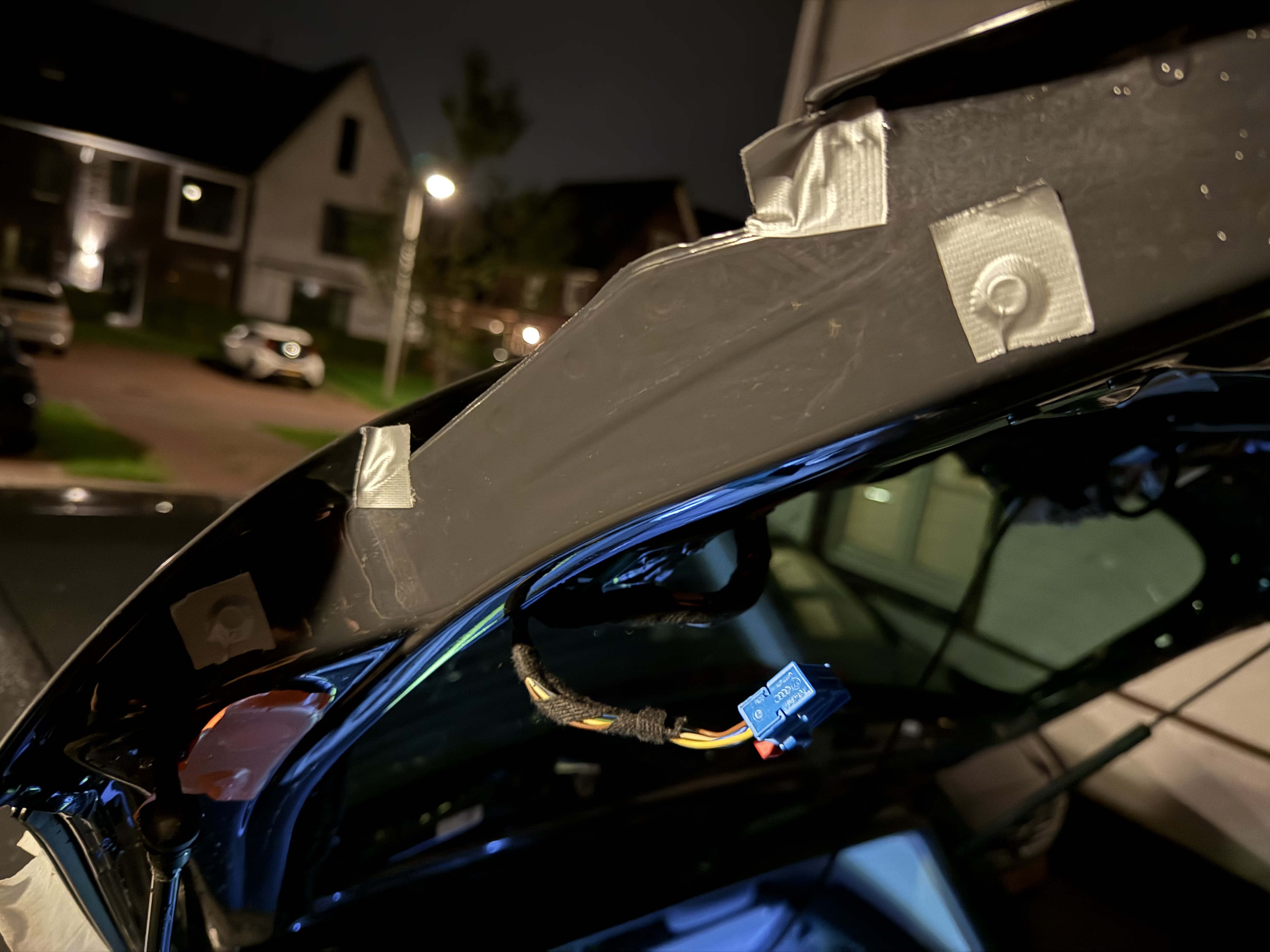
Unfortunately, after some heavy rains, I still found some water ingress. So, apparently, water is still entering the trunk lid somewhere. I repeated my water ingress test setup, and ruled out that water was entering via these spot welds.
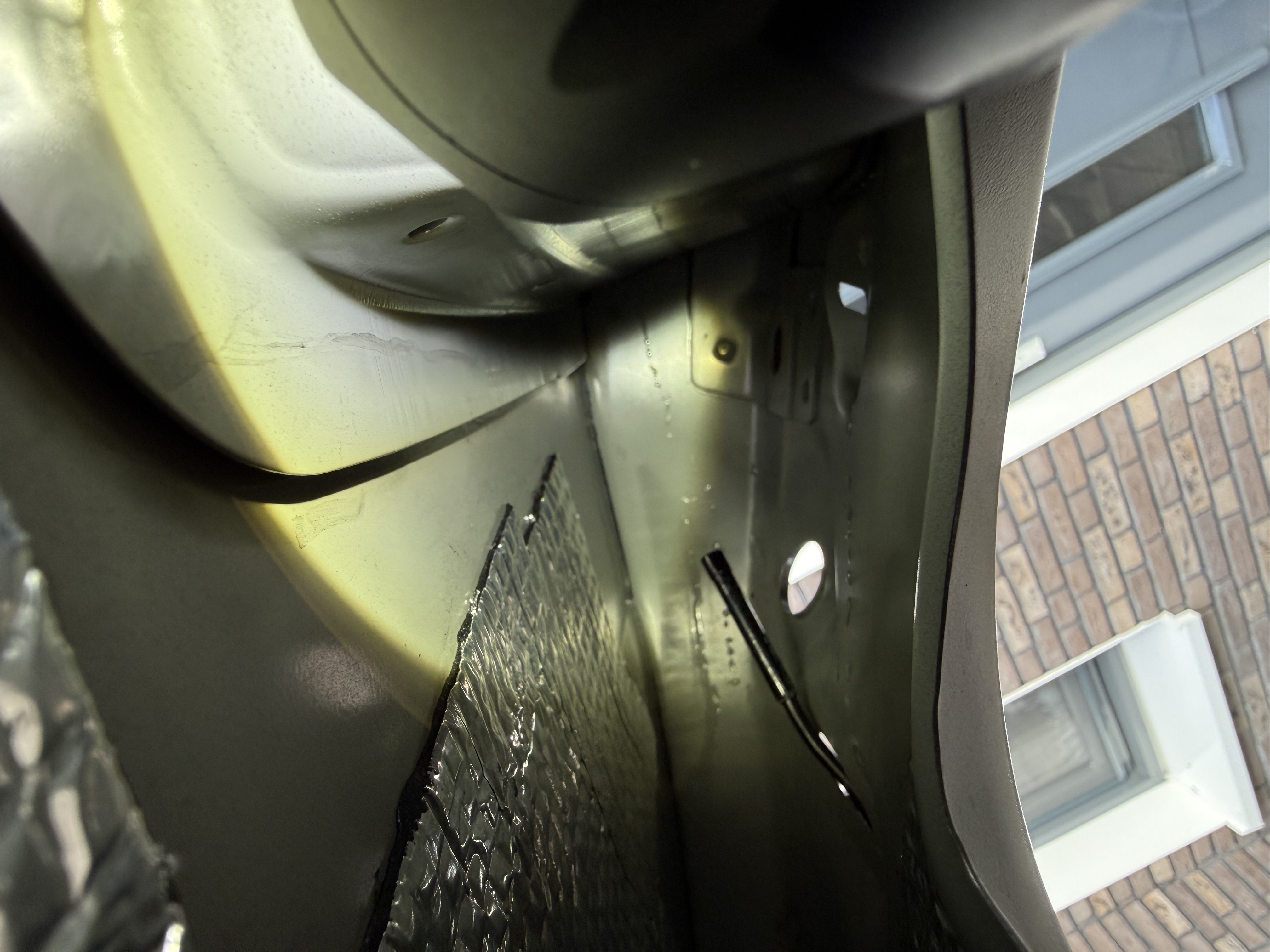
On a Saterday, I decided to give it one more go, and test it thoroughly. Using the boroscope camera, I inspected the inside of the trunk lid, and found an interesting brown/rusty spot. This makes sense: water would enter here, then run down between the pocket and the lid, and finally drip down inside the lower section of the trunk lid. After inspecting the outside, I noticed that the weld of that spot was looking bad, potentially broken. I’m 95% sure that this is how water is entering the trunk lid.
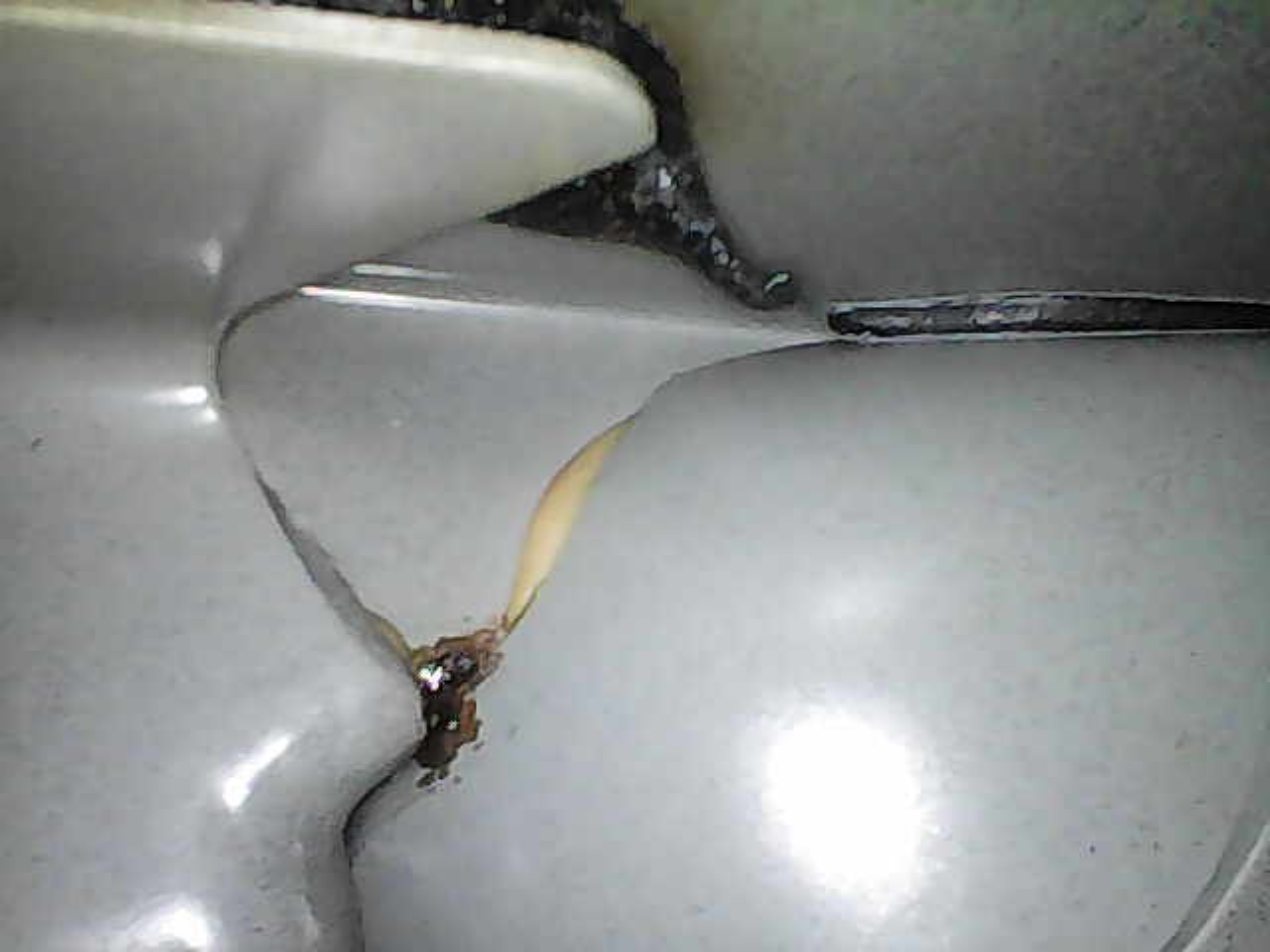
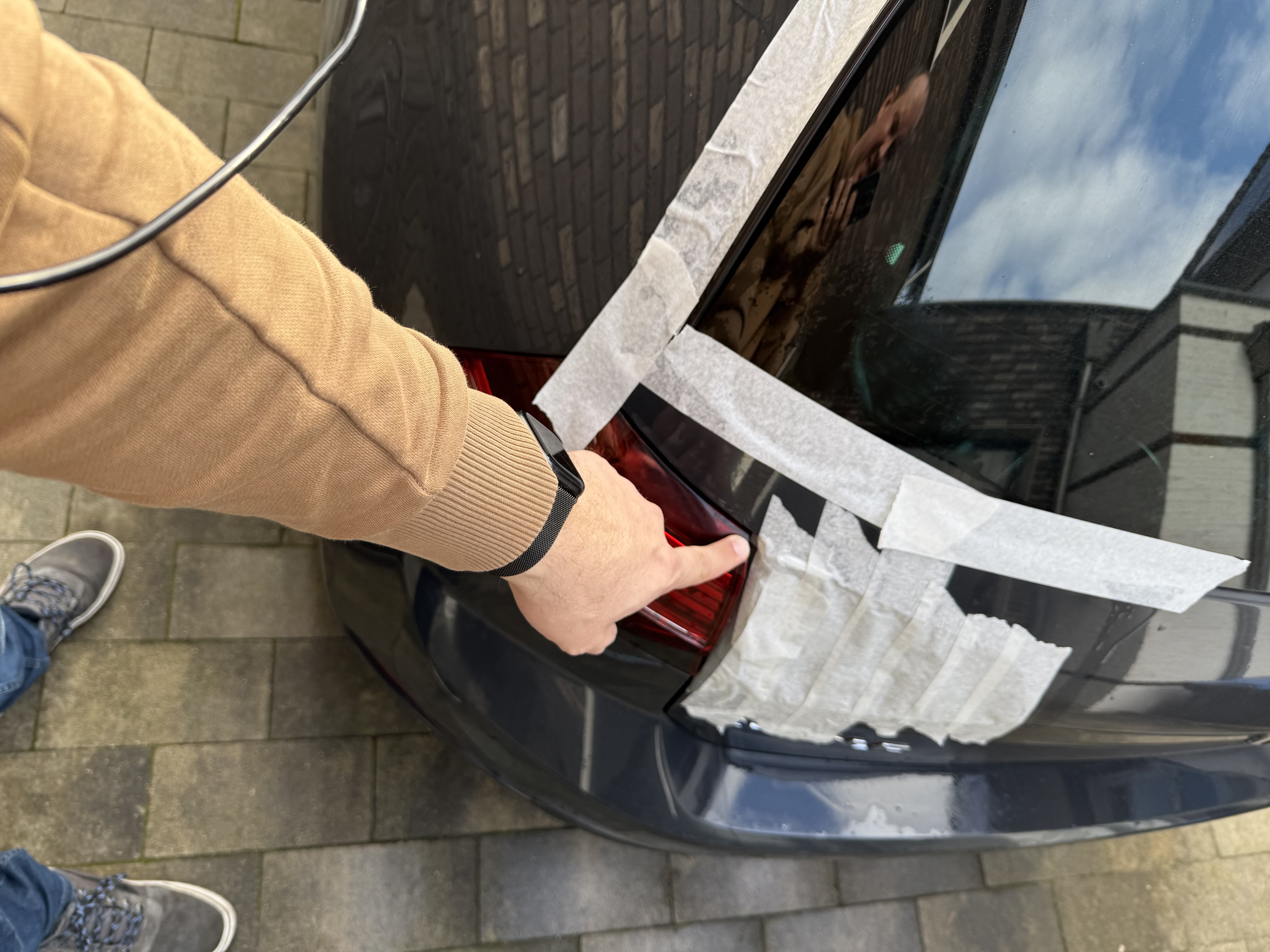
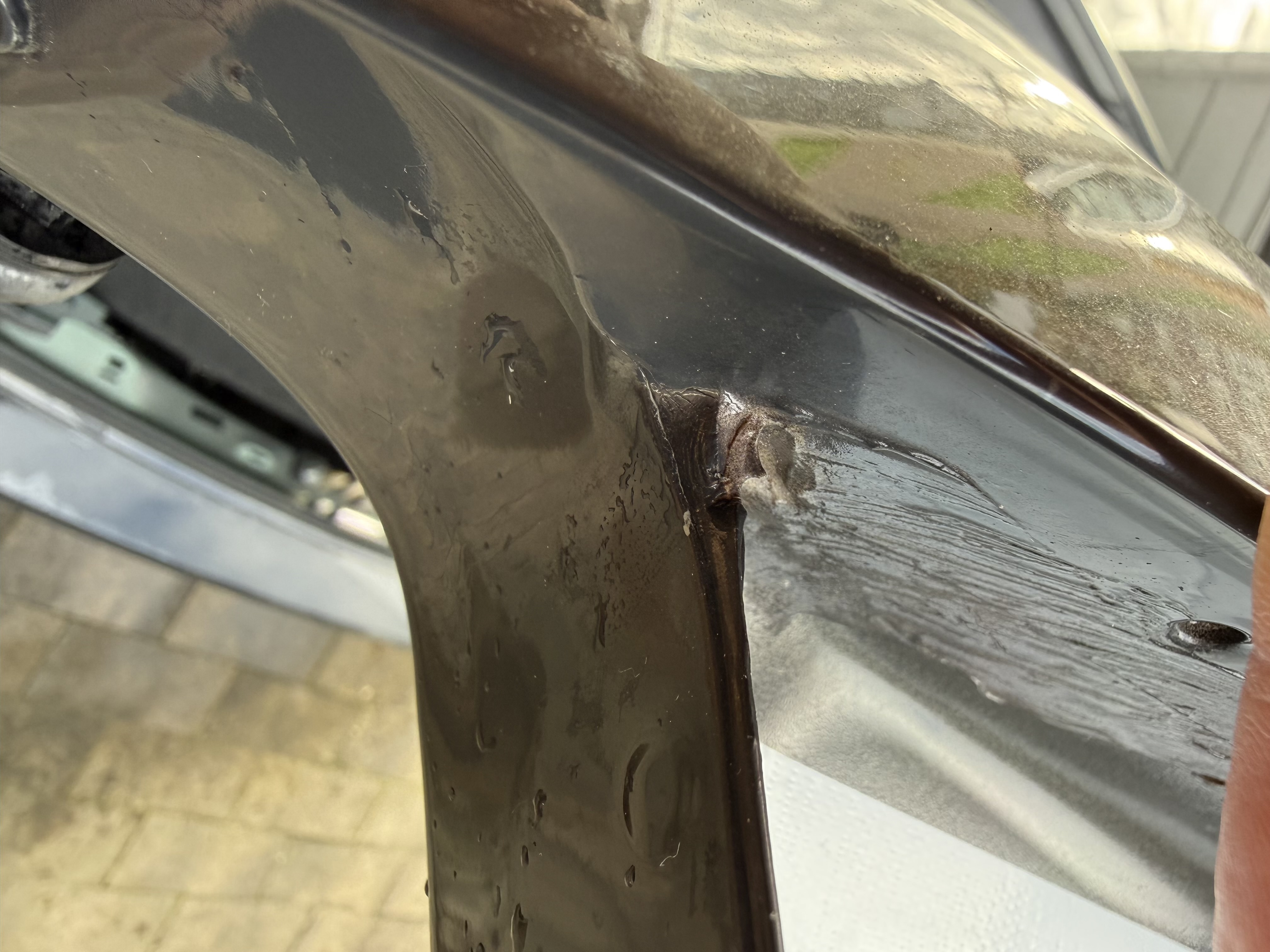
I have recorded this on camera, and made a small video of it here. You might have to watch it twice, but this clearly shows water entering the trunk lid almost immediately after I start pouring water. I filmed this using the boroscope camera, which I mounted inside.
This car still has warranty. I contacted the dealer, and agreed that I could get a real diagnosis at the local dealer. I hope their findings will align with mine, and that a durable fix is possible. Unfortunately, the earliest date I could get is beginning of Feruary 2026. Given that this leak is manageable, I can wait that long. It is probably there for quite some time already. Since the other side has the same problem, it is likely that this is a manufacturing defect. On internet forums, I have not been able to find similar cases, but then again: not everybody removes the trim pieces and checks for water ingress.